Showing posts with label Storytelling. Show all posts
Showing posts with label Storytelling. Show all posts
Wednesday, July 30, 2014
Check Your Head
Man, it's been a while. Anyway, I'm over at Project Middle Grade Mayhem today, expanding on a theme I started a long time ago, in my old post Storytelling. If you have time, please drop by and check it out.
Monday, March 18, 2013
Storytelling
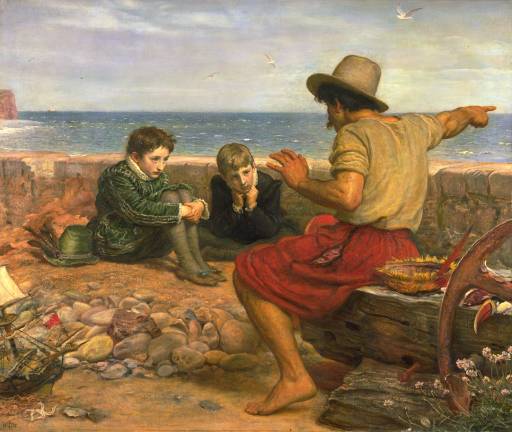
I've been beating myself up for the last couple weeks. After I finished my revisions on Running from Ruby Ridge, I spent the normal amount of time enjoying the fact that I finished a freaking novel (how long is normal again?) and then I ... stagnated.
I'd had the idea for my next book in my head for a while, but I'm the kind of writer who can only focus on one thing at a time. I know some people who work on more than one project at once, but to me, that's nuts. So anyway, while I was drafting Ruby Ridge, I could not really think about Book the Next. I mean, I did think about it, of course, but I didn't really think about it, you know what I mean?
So now I spent the last two or three weeks diddling around. I wrote some character sheets (I've never messed with that before). I wrote an outline (a really bad, really thin one). I researched the bit of real life that inspired the story. But ... it wasn't until last night that I finally realized it was okay what I was going through.
Sometimes a story needs time to solidify in your mind. I wasn't to that point yet. I think I might be now.
How do you know when you're at the point? I'm not sure, and I'm not sure it's the same for everyone, but for me, it's when scenes are coming to you while you're driving. When the story is invading your dreams. When lines of dialog spring into your mind while you're in the shower. When you have to have a notebook, or at least your phone, with you at all times because you never know when you'll be struck with inspiration.
Yeah, I'm there.
When do you know you're ready?
Wednesday, February 13, 2013
Grateful Quote

“Like fairy tales or folk songs, all versions are true. The more versions there are, the truer it is." - Phil Lesh
Wednesday, January 2, 2013
Several Things About The Hobbit: A Review (of Sorts)

It's been a couple of weeks now, since I saw two of the three available versions of Peter Jackson's new foray into Middle Earth, known as The Hobbit: an Unexpected Journey. Overall, I loved the film, but I want to dig a little deeper, and see whether that love might be at least partially due to my tendency to view anything Tolkien related through rose-tinted glasses.
The first thing I want to cover, before I get into the story, is the new technology, namely the Stereoscopic (3D) High Frame Rate (48 fps) release. Before I discuss this, let me say I have not see the normal 3D (24 fps) release, but, that said, the 3D aspects of the HFR release I did see actually did not feel as intrusive as they have in some other films (I am not, essentially, normally a fan of 3D).
Ahem.
So, the High Frame Rate version ... what can I compare it to? I guess it was a lot like a bottle of cheap vodka. The right amount, mixed properly, can be a lot of fun, but too much, and everything is ruined. Unfortunately, the HFR was not a dynamic aspect of the film. It was static, constant, and overall, became intrusive.
Don't get me wrong. There were certain things it definitely improved. Landscape shots, wide shots, outdoor shots, and in particular, anything where the camera was in motion, especially on a boom, a track, shots presumably taken from a helicopter, or shots rendered in sweeping CGI, looked absolutely gorgeous, and while they were gorgeous in 2D (standard frame rate) too, there was a clarity to them in the HFR version that not only did my eye catch, but I actually thoroughly enjoyed.
Sadly, these shots were a smaller portion of the film than the scenes that were negatively affected. Whenever the camera was stationary, especially when the actors were in close-up, or were in motion while the camera was not, the animation of the objects on screen felt stilted, almost false, like when you watch certain BBC productions on an LCD HDTV. It's hard to describe, but if you've seen it, you know exactly what I'm talking about.
All in all, though I do think HFR may have a future in Cinema, for this film, in my opinion, it was more detrimental than it was beneficial. If you can only afford to see The Hobbit once, I recommend seeing it in standard frame rate. I loved the 2D version at 24 fps, but the 3D version may also be quite good.
If you're the technical type, and would like to read a much more in depth analysis of all this, check out Vincent Laforet's blog post about it, here: The Hobbit: An Unexpected Masterclass in Why HFR fails, and a reaffirmation of what makes cinema magical.
* * *
Now, let's talk about the story. Or more so, what Jackson did with it. Before I make my points, go read this very funny post by Genevieve Valentine: Ten Things You Should Know About The Hobbit.
Obviously I don't agree with all her points, though I do enjoy the post. So, let me cover some of her items, as a way to try to briefly get to: All. The. Things.
1) Bilbo. Basically, I agree. Martin Freeman is a fabulous actor, and he really shines in his performance as Bilbo Baggins. I don't know that I agree entirely about the beginning. The scene (rambling, probably far too long) with the Dwarves, and dinner, and the dishes, goes on for far too long, and there are some awkward moments, even from Bilbo, but the scene is awkward in the book, and it makes sense for Bilbo to be rather uncomfortable. I do agree that Freeman hits his stride just as he hits the road ("I'm going on an Adventure!") but I would also argue that the scene in which he first good mornings Gandalf is one of the best exchanges I've seen between two brilliant actors in a long time (it's later eclipsed by Gollum and Bilbo in the riddle scene).
Of note: Gandalf has a line in Bag End, when he's trying to convince Bilbo to come on the adventure, in which he says something like: "all the best stories deserve a little embellishment." I see what you did there, Peter Jackson. Well played, sir. Well played.
2) Thorin Oakenshield. I get it, I do. Richard Armitage is handsome. This movie has no Aragorn. Thorin's backstory is not completely, entirely accurate to canon. But, I have to say, for the most part, at least for me, it worked. The antagonism between Thorin and Bilbo, and the way their relationship builds through the story is one of the main (pair of) character arcs in the book, and while the movie certainly protrays Thorin in a way I never would have pictured ahead of time, I can't say that I didn't like it.
Of note: Richard Armitage has quite a set of pipes, and can sing like Durin himself.
3) The Dwarves. Okay, sure, there are too many, and in the film, a couple of them feel completely superfluous, but this is Tolkien, and when you're turning a short novel into three feature length films, you're certainly not cutting anything.
Of note: there is an Orcish axe permanently embedded in Bifur's head. Please don't let this come up in dialog in the later films. Like Legolas surfing down the stairs of the deeping wall at Helm's Deep, if you're cutting anything, it ought to be this nonsense.
4) Radagast. I'm pretty well split in my opinion of Radagast. On the one hand, some of the foolishness he portrays in the film does fit with how he is described in Middle Earth canon, but I was still annoyed by a lot of it, because he is, after all, one of the Istari, a Maiar, and I just couldn't swallow him as quite such a bumbling old fool. That said, a Facebook friend of mine, Paul Genesse, wisely pointed out that this could all be subterfuge on Radagast's part, and his point is somewhat well supported when Radagast actually has a moment of strength at Dol Guldur.
Of note: pipe weed is not marijuana. Saruman certainly talks about the Halfling's leaf slowing Gandalf's wits in the books, but the smoking was much funnier, less silly, and more subtle in the Lord of the Rings trilogy.
And this post is getting way too long. I'll have to continue it some day soon. For now, I'll just add that if someone out there could edit out the two egregiously overdone CGI sequences that I could not stand (stone giants, and falling bridges in the goblin kingdom) I think we'd have a very good, if not excellent, film on our hands (preferably the 2D standard frame rate version).
What do you all think? Has anyone seen all three versions? I'm particularly interested in hearing about the 3D standard frame rate format.
Otherwise, Happy New Year to all of you, dear readers!
30
opinions that matter

 Labels:
2D,
3D,
Film,
HFR,
Peter Jackson,
Storytelling,
Technology,
The Hobbit,
Tolkien
Labels:
2D,
3D,
Film,
HFR,
Peter Jackson,
Storytelling,
Technology,
The Hobbit,
Tolkien
 Labels:
2D,
3D,
Film,
HFR,
Peter Jackson,
Storytelling,
Technology,
The Hobbit,
Tolkien
Labels:
2D,
3D,
Film,
HFR,
Peter Jackson,
Storytelling,
Technology,
The Hobbit,
Tolkien
Thursday, August 25, 2011
Behind the Scenes Storytellers - Part III: Richard Price

All right. So thank you very much for your patience and support yesterday. I know you guys have been loving this series, and I'm sorry I had to interrupt it, but I'm obligated to my incredible peers over at Project Mayhem.
Anyway, let's get back to work. I'm going to cheat a little bit this morning. I know. I'm sorry, but I think you'll find you're willing to forgive me. Today I've selected Richard Price as my behind the scenes storyteller. The reason I call this cheating is that Richard is actually a relatively famous "crime novelist," which is certainly not a behind the scenes role, but he is also pretty well unknown for being an incredibly talented screenwriter, which is a position that almost never gets the glory.
Mr. Price wrote the scripts for a few famous films like Sea of Love, and The Color of Money, but the way I discovered his talent was through the HBO series, which may be the best television show ever written: The Wire.
Before I get to the reason I'm actually featuring Richard toady: his screenwriting, I want to share with you one of the greatest interviews I have ever had the pleasure to witness in my personal pursuit of understanding writing. Richard Price was interviewed by Terry Gross, from NPR's Fresh Air, in 2008, about his then new novel: Lush Life. It's technically a crime novel, but IMHO it's also one of the greatest modern character studies in English Literature:
It's pretty long, but if you have time, PLEASE LISTEN TO THIS INTERVIEW. It's one of the best discussions of writing I've ever heard. The interview is mostly about the novel, but if you listen to the whole thing, you'll find he talks a lot about writing for the HBO TV series, The Wire, as well.
Another great discussion of the novel is available, in one of Evil Editor's book chats, here.
So. That's a lot about Richard Price's novel writing. I promised this post wouldn't be about that, and I suppose I've failed, but I do want to talk about his screenwriting. I've obviously never written a script, and I've never been to film school, but I imagine writing for TV is as different from writing for film as writing a Picture Book is from writing a novel. Not to imply that any of the four should be considered as less than any of the others, just that they're different.
Yeah. That's all beyond my scope of understanding, but I will say this: I know a powerful scene when I witness one, no matter what the medium, so I want to share with you a scene from near the end of The Wire, which Richard wrote, in which the policewoman, Kima, who happens to be gay, and has just ended her relationship, is reconnecting with her young son, who cannot sleep. The scene is not quite as powerful taken out of context, but I consider it an interesting, and surprisingly contemporary, take on a classic story:
And that, I suppose, is that. I could go on, but I'm sure you'd all get bored, so instead I'll just say this: anyone who is interested in discovering a great writer you might have never heard of should look into Richard Price. Here are a few resources:
Price interviewed by the City Paper.
Richard Price in the LA Weekly.
Richard Price in New York Magazine.
Thanks for reading, everybody. Happy Thursday!
NOTE: I've been asked to link back to Presentation Geeks, which is a useful site with a lot of tools and lessons for presenting information to fans and readers. Please check them out, and in particular, their article Captivate Your Audience With The Art Of Presentation Storytelling.
Tuesday, August 23, 2011
Behind the Scenes Storytellers - Part II: Roger Deakins

Today I'm writing about Roger Antony Deakins, ASC, BSC. Roger is a Cinematographer, which is sometimes also referred to as a Director of Photography. I'm no film major, so it's possible the two terms are not exactly interchangeable, but they're basically the same thing as far as I know.
Anyway. Roger is mostly known (or unknown) for his collaboration with the Coen brothers, and has been the cinematographer on almost every one of their feature films. But he doesn't only work with them. Deakins was born in England, and studied film at both the Bath School of Art and Design and the National Film and Television School.
He got started as a camera operator not long after school, and his early career consisted mostly of documentaries about Africa. Who doesn't love a good documentary? After that he moved into films about music, working on "rockumentaries" and music features like Van Morrison in Ireland and Sid and Nancy.
Deakins' first American feature was Mountains of the Moon, in 1990, but he worked with the Coen brothers soon after, on the 1991 film, Barton Fink. Deakins received his first major award from the American Society of Cinematographers for his outstanding achievement in cinematography for the internationally praised major motion picture, The Shawshank Redemption. In 2008, Deakins became the first cinematographer in history to receive dual ASC nominations for his works, The Assassination of Jesse James by the Coward Robert Ford and No Country for Old Men.
He received the 2011 American Society of Cinematographers (ASC) Lifetime Achievement Award.
Roger has been nominated for no less than 9 Academy Awards, but for some reason unknown to god or man, has never won.
Here is a list of some of his most famous films:
- Barton Fink
- The Hudsucker Proxy
- The Shawshank Redemption
- Fargo
- Kundun
- The Big Lebowski
- O Brother, Where Art Thou?
- The Man Who Wasn't There
- The Assassination of Jesse James by the Coward Robert Ford
- A Beautiful Mind
- Intolerable Cruelty
- The Ladykillers
- Jarhead
- No Country for Old Men
- The Reader
- Revolutionary Road
- A Serious Man
- True Grit
Here are some clips of his work.
Here is a video of him discussing a scene in The Shawshank Redemption with NPR's Melissa Block. The audio is great, but somehow they ruined the video:
Here's another video from the same interview, where the video isn't ruined:
And here's a great featurette about True Grit:
Another unsung hero of behind the scene storytellers. I have to take a break from this series tomorrow, but please still come back!
Monday, August 22, 2011
Behind the Scenes Storytellers - Part I: Sly and Robbie

I don't know if many people would count music producers as storytellers, but I do, and this is my blog.
Sly Dunbar and Robbie Shakespeare are probably the most prolific recording artists in the history of music, and most people have never heard of them. They've produced more songs than The Beatles, The Rolling Stones, Bob Marley, and even Rick Rubin. It's estimated that they have performed on, or helped produce, over 200,000 songs.
They started out as the rhythm section of drummer Lowell Dunbar (nicknamed Sly after Sly Stone) and bass guitarist Robert Shakespeare, but have since evolved into a production team making all kinds of music from Dancehall and Reggae, to Rock, Pop, and R&B. They are known for a distinctive drum and bass, reggae swing sound, and make some of the best beats and basslines I've ever heard.
From Wikipedia:
Far from restricting themselves to the Jamaican scene, (in which they have played for virtually every prominent Jamaican musical artist from Beenie Man to Sean Paul to Peter Tosh, Black Uhuru, Gregory Isaacs, Dennis Brown, Ini Kamoze and others), they have been one of pop music's most sought after rhythm sections, playing for and producing superstars such as Ben Harper, Bob Dylan, Mick Jagger, the Rolling Stones, Grace Jones, Joan Armatrading, Gilberto Gil, Joe Cocker, Matisyahu, Serge Gainsbourg, Simply Red, Michael Franti, Sting, Khaled, Mey Vidal, Naniwaman, Tricky, Doug E. Fresh, Carlos Santana, Sinéad O'Connor, and many more.
I don't think I've ever come across a song that Sly and Robbie had a part in making that I didn't like. They don't get a lot of recognition for their work, even though they work hard, but they've played a big part in making a lot of great songs for a lot of great artists.
Here are a few songs you probably didn't know they made:
Matisyahu - Jerusalem (Out Of The Darkness Comes Light)
Mick Jagger - She's the Boss
Michael Franti and Spearhead - Say Hey (I Love You)
Madonna - Supernatural (Remix)
Herbie Hancock - Rockit (12 inch maxi-mix)
No Doubt - Underneath It All ft. Lady Saw
Chaka Demus & Pliers - Murder She Wrote
No Doubt - Hey Baby ft. Bounty Killer
Please come back tomorrow for another unknown taleweaver.
Tuesday, November 30, 2010
Best and Worst Film Adaptations
I can't believe I'm already back at work and back to the daily grind. I had five days off in a row, and while it was wonderful, it was far too short. Poop.
I didn't get as much writing done as I would have liked, but I did get some done, so I'll take it for what it is. One thing we did do over the weekend was have a Harry Potter marathon. My little nephew came over on Saturday, and both he and my kids (and I) love Harry Potter, and we saw the new one last weekend, so we spent Saturday watching several of them in a row.
Now, I love them all, but I will say that they very a lot in the quality of adaption from the books. There is a different director for almost every single film, and while the style stays somewhat similar, there are differences. Anyway, point is it got me thinking about adaptations of books I loved into films. It is a deep and complex topic, which is a lot of fun to think about. Too bad I have only a few minutes here.
So I'm going to talk briefly about some of the best and worst adaptations of all time, IMHO. For best, there are several options, The Silence of the Lambs by Thomas Harris was an excellent book and an amazing film, and the adaptation was pretty accurate. I would probably rate it higher if the other films in the series were not so terrible. Contact by Carl Sagan is another good example. The book was amazing, and the film was very good, though probably not 100% accurate.
That being said my favorite adaptation of all time is the Peter Jackson/New Line production of the Lord of the Rings. All three films were incredible, and excellently adapted, but I think that the Fellowship of the Ring is the best of the three. I realize it takes a hit in accuracy for skipping the entire Tom Bombadil and River Daughter section, but I actually think that worked quite well in the film. Nearly everything else was pretty close to the novel, and they included so much, which is rather difficult considering the sheer volume of the tale.
This was probably the most anticipated adaptation ever, and with the amount of hype that went along with the production, it's essentially nothing short of amazing that it turned out as well as it did. I remember having a picture book with a read along cassette of LOTR as a kid, so I had been waiting for this FOREVER, and apart from a couple of cheesy Legolas hollywood shield and trunk surfing moments, it did not fail to please.
 (this is not the right product, but it's the closest picture I could find)
Moving on before I go on forever I should cover some bad adaptations. I'm not exactly sure what went wrong with The Golden Compass by Philip Pullman. The books are very good, and I actually thought the film wasn't bad, but for some reason it seems to have flopped because I have not heard a thing about any sequels (the books are a trilogy).
I tried to look up some other examples but they're either books and movies that I loved (some people online apparently think Kubrick's version of Stephen King's The Shining was terrible) or I haven't read the book. So rather than spending any more time on this than it deserves I'll just tell you what I think was the worst film adaptation in recent history: Eragon.
I know some of you thought the book was completely derivative, which I'll admit it was, but I still loved it. And the film? Jeremy Irons? John Malkovich? Djimon Hounsou? It should have been outstanding. Instead it was terrible, nothing like the book, flopped at the box office, and ruined any chances of the sequels ever being made. Thankfully the books are doing fine and the video game was okay.
So that's it for today. What are the best and worst adaptions ever in your opinion? I'm especially curious to hear from film buffs like Alex and Dezmond.
I didn't get as much writing done as I would have liked, but I did get some done, so I'll take it for what it is. One thing we did do over the weekend was have a Harry Potter marathon. My little nephew came over on Saturday, and both he and my kids (and I) love Harry Potter, and we saw the new one last weekend, so we spent Saturday watching several of them in a row.
Now, I love them all, but I will say that they very a lot in the quality of adaption from the books. There is a different director for almost every single film, and while the style stays somewhat similar, there are differences. Anyway, point is it got me thinking about adaptations of books I loved into films. It is a deep and complex topic, which is a lot of fun to think about. Too bad I have only a few minutes here.
So I'm going to talk briefly about some of the best and worst adaptations of all time, IMHO. For best, there are several options, The Silence of the Lambs by Thomas Harris was an excellent book and an amazing film, and the adaptation was pretty accurate. I would probably rate it higher if the other films in the series were not so terrible. Contact by Carl Sagan is another good example. The book was amazing, and the film was very good, though probably not 100% accurate.
That being said my favorite adaptation of all time is the Peter Jackson/New Line production of the Lord of the Rings. All three films were incredible, and excellently adapted, but I think that the Fellowship of the Ring is the best of the three. I realize it takes a hit in accuracy for skipping the entire Tom Bombadil and River Daughter section, but I actually think that worked quite well in the film. Nearly everything else was pretty close to the novel, and they included so much, which is rather difficult considering the sheer volume of the tale.
This was probably the most anticipated adaptation ever, and with the amount of hype that went along with the production, it's essentially nothing short of amazing that it turned out as well as it did. I remember having a picture book with a read along cassette of LOTR as a kid, so I had been waiting for this FOREVER, and apart from a couple of cheesy Legolas hollywood shield and trunk surfing moments, it did not fail to please.
 (this is not the right product, but it's the closest picture I could find)
Moving on before I go on forever I should cover some bad adaptations. I'm not exactly sure what went wrong with The Golden Compass by Philip Pullman. The books are very good, and I actually thought the film wasn't bad, but for some reason it seems to have flopped because I have not heard a thing about any sequels (the books are a trilogy).
I tried to look up some other examples but they're either books and movies that I loved (some people online apparently think Kubrick's version of Stephen King's The Shining was terrible) or I haven't read the book. So rather than spending any more time on this than it deserves I'll just tell you what I think was the worst film adaptation in recent history: Eragon.
I know some of you thought the book was completely derivative, which I'll admit it was, but I still loved it. And the film? Jeremy Irons? John Malkovich? Djimon Hounsou? It should have been outstanding. Instead it was terrible, nothing like the book, flopped at the box office, and ruined any chances of the sequels ever being made. Thankfully the books are doing fine and the video game was okay.
So that's it for today. What are the best and worst adaptions ever in your opinion? I'm especially curious to hear from film buffs like Alex and Dezmond.
Subscribe to:
Posts (Atom)